
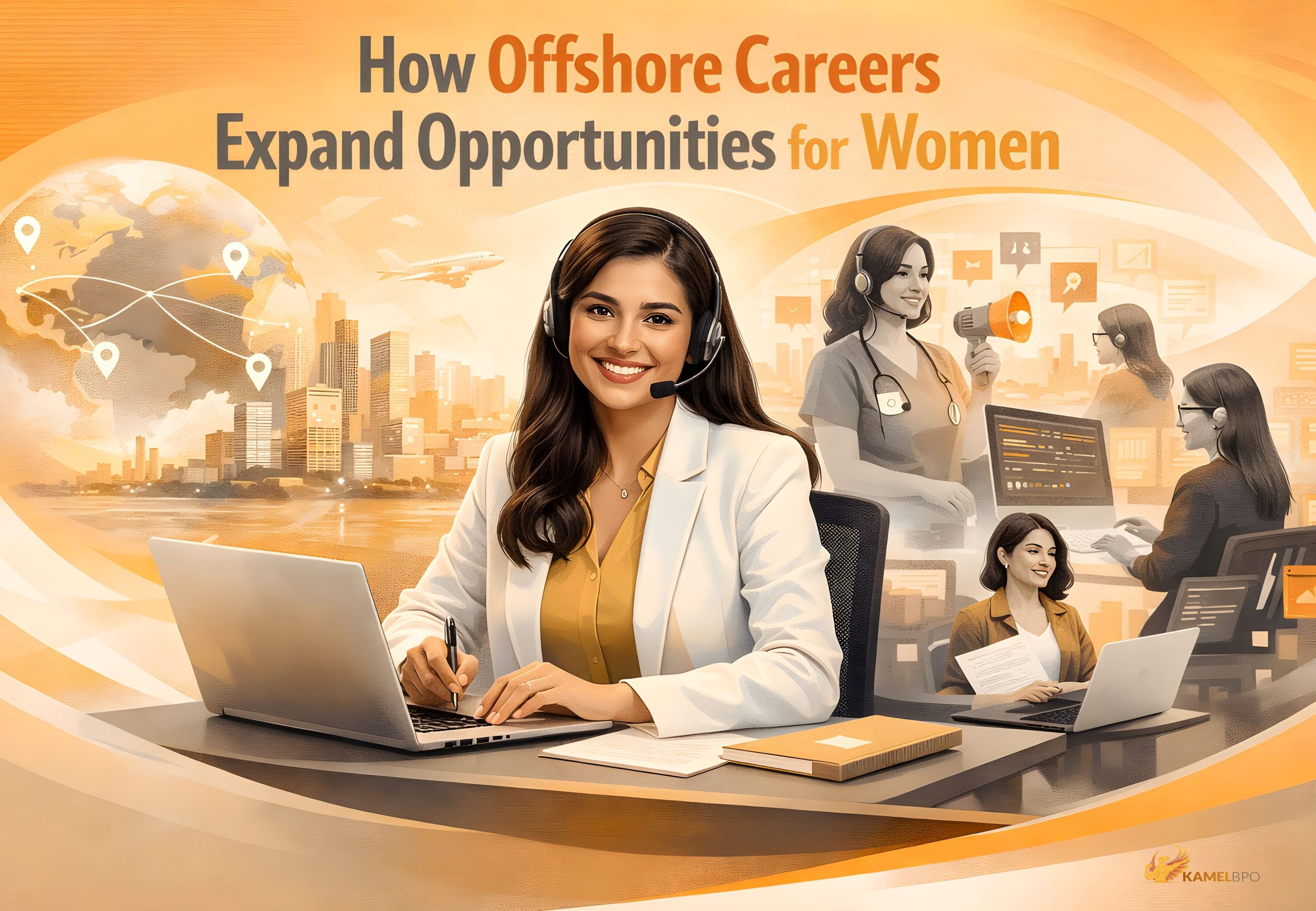
Offshore careers refer to jobs performed for companies in another country while the worker remains based in their home market. In the past, this setup was often limited to basic support functions. Today, that view is outdated. Global hiring, remote work, and outsourcing have expanded the range of offshore roles across customer service, marketing, finance, healthcare support, technology, and other knowledge-based fields. Published research and international labor reports show that digital work, home-based work, and global service trade have widened access to paid work for many women, especially in service sectors that can be delivered remotely.
Why Offshore Work Benefits Women
Offshore careers are creating more opportunities for women because the way companies hire has changed. In the past, traditional outsourcing often meant moving repetitive tasks to an outside vendor, mainly to reduce cost. Today, modern offshore work looks different. Many companies now build remote teams across countries and hire people into ongoing roles tied to customer experience, marketing, finance, operations, and growth. The OECD reports that employer willingness to hire fully remote workers globally increased after the pandemic, which shows how cross-border hiring has become more normal for business operations.
At the same time, offshore roles are no longer limited to call centers or basic support work. Women now work in customer support, digital marketing, content writing, social media management, virtual assistance, finance and accounting support, recruitment, healthcare support, IT, and creative design. ILO research on digital labour platforms highlights how women are already participating in work linked to sectors such as business process outsourcing, e-commerce, tutoring, healthcare, online freelancing, and other service-based activities.
Employers are also hiring offshore talent for long-term, strategic roles instead of one-time tasks alone. They want professionals who can manage accounts, create campaigns, support clients, coordinate hiring, handle reporting, and improve systems over time. For offshore careers for women, this creates a stronger path to stable income, skills growth, and meaningful career development. It also gives women greater visibility in global teams, which can support a stronger professional identity and long-term mobility across industries. As offshore work becomes more skills-based, women can build careers that start with execution and grow into specialization, leadership, training, and direct client-facing responsibility.
Key Benefits of Offshore Careers for Women
One major benefit of offshore work is greater financial independence. Many roles offer steady income and access to clients or employers in stronger global markets. That can matter for women who want to cover daily expenses, support their families, save for education, or invest in small business ideas. World Bank and ILO materials on digital jobs note that online and remote work can widen access to paid employment and income-earning opportunities for women, especially where local options are limited. At the same time, income earned through global work can improve financial control and decision-making power within households.
Offshore careers also support career growth and professional confidence. Women who work with international clients and distributed teams often strengthen their communication, project management, technical, and problem-solving skills. They learn how to use global tools, follow structured workflows, and meet professional standards expected in cross-border work. OECD research on teleworking notes that remote work can expand access to jobs and make work more compatible with personal responsibilities, while digital job reports show that these roles can build skills that improve future mobility.
Another benefit is better work-life integration in some roles. Offshore jobs do not remove care responsibilities, but they can give women more control over where and sometimes when they work. That can help those returning to the workforce after a career break or balancing paid work with family needs. Research also shows that flexible work can reduce some mobility barriers, though results depend on fair policies and realistic workloads. For many women, that flexibility can make continued employment more practical and sustainable.
In addition, offshore work gives women access to learning, digital tools, and broader career identity. Exposure to platforms, reporting systems, collaboration tools, and client processes can speed up learning and build digital confidence. Women are no longer limited to narrow job tracks. Offshore careers for women can lead to consulting, freelancing, team leadership, operations management, or specialized support roles as experience grows.
Top Offshore Career Paths for Women
Women are finding strong offshore career paths across a wider range of industries than before. In customer experience and support, roles now include voice, chat, email, and account support, with paths into quality assurance, training, and team leadership. In content, marketing, and creative work, women are building careers in writing, SEO, social media, graphic design, and video editing.
Admin and operations support also remain strong. Startups and small businesses often hire virtual assistants, executive assistants, and project coordinators to manage calendars, systems, reporting, and workflow follow-through. In healthcare and legal support, remote roles include medical billing, documentation, scheduling, intake support, legal administration, paralegal assistance, and case coordination. These functions require accuracy, organization, and trust, which makes them valuable long-term roles rather than simple task work.
Finance, human resources, and recruitment offer another important path. Women work in bookkeeping, payroll support, talent sourcing, onboarding, and people operations, where process discipline and communication are both essential. At the same time, more women are entering tech-enabled roles such as data support, quality assurance, web support, CRM management, and basic automation support. ILO and World Bank materials show that digital work now includes both foundational and skilled service roles, which helps explain why offshore careers have become more diverse and more viable across industries. This diversity matters because it lets women choose paths that match their strengths, whether those strengths are empathy, organization, analysis, writing, design, or technical problem solving. It also shows that offshore work is no longer confined to one business model or one type of employer. Large firms, startups, clinics, agencies, and professional service companies all hire remote talent for ongoing work.
Barriers Women Still Face in Offshore Careers
Women’s access to offshore work is expanding, but barriers remain. First, not everyone has the same access to a laptop, fast internet, backup power, or a quiet place to work. World Bank research on digital jobs and job platforms shows that women are often more likely to face lower familiarity, less access to devices, and weaker internet connectivity, which can limit entry into remote work from the start. These gaps matter because offshore work depends on tools, connectivity, and consistency, not talent alone.
In addition, time zone differences can create strain. Some offshore roles require late-night schedules, rotating shifts, or availability for overseas clients. At the same time, women still perform a larger share of unpaid care work in many households, according to OECD and ILO research. That combination can increase fatigue and make burnout more likely when paid work and family duties overlap every day. Remote work may offer flexibility, but flexibility without support can still leave women carrying two workloads at once. It can also affect sleep, health, and job retention when schedules stay misaligned with family routines.
Women may also face gender bias in pay, promotions, and leadership access. In remote settings, limited visibility can reduce mentorship, feedback, and sponsorship, especially for workers outside headquarters. Some women also feel pressure to constantly prove productivity in distributed teams where output is closely watched. In practice, this can make talented workers feel overlooked even when they perform well. For that reason, opportunity alone is not enough. Growth in offshore careers for women is stronger when employers create fair systems, invest in training, provide the right tools, and build networks that support progression, recognition, and long-term well-being across global teams today. These support systems help turn access into career development instead of participation without mobility.
How Women Can Position Themselves for Offshore Career Growth
Women who want to grow in offshore work should start by building skills that employers repeatedly look for. Clear communication matters because remote teams rely on written updates, client messages, and meeting follow-through. Digital literacy also matters because most roles now depend on shared platforms, reporting tools, and online workflows. In addition, project ownership helps women stand out. Employers value people who can manage tasks, solve problems, and move work forward without constant direction. World Bank research on digital jobs for women highlights the importance of both foundational digital skills and role-specific capabilities for long-term employability.
Next, women should strengthen their professional branding. A resume tailored to offshore roles should highlight remote collaboration, tools used, measurable results, and client-facing work when relevant. A strong LinkedIn presence can also improve visibility, especially for recruiters and overseas employers searching by skill. This matters because employers often hire across borders based on trust, clarity, and evidence of performance. That approach builds credibility and supports stronger career mobility.
Adaptability is also essential. Offshore roles often require communication across cultures, time zones, and work styles. Women who stay flexible, respond well to change, and work comfortably in remote systems are often better positioned for growth. They should choose employers that offer training, clear career paths, and supportive management rather than focusing only on immediate pay. Short courses, certifications, and hands-on experience with current tools can keep skills relevant as roles evolve.
Why Offshore Careers Are Part of a Bigger Shift in Women’s Economic Empowerment
Offshore careers are not only about employment. They are part of a wider shift in how women access income, build confidence, and strengthen decision-making power in their own lives. Research from the World Bank, OECD, and ILO shows that digital work can expand women’s access to paid work, skills, and professional networks, while also creating new paths into formal economic participation. That matters because income is only one part of empowerment. Women also gain a stronger voice in financial choices, greater visibility in professional spaces, and more room to shape long-term goals. In the same way, offshore careers for women widen access to leadership, global collaboration, and career mobility across borders.